Pet Product MOQ: What Sets It and How to Work With It
Every MOQ is a setup cost divided by a quantity. Once you can see which costs are fixed per design and which are fixed per SKU, the number stops being a wall and becomes something you can plan a first order around.
The short answer, and the number behind it
A pet product MOQ is not a policy a factory invents to be difficult. It is almost always the point at which one production run stops losing money on setup. For pet furniture the binding constraint is rarely the material cost — it is the fixed time in a run: cutting panels to a new size, resetting the edge bander, winding fresh sisal to a new post length, printing and approving a carton, and the first-article inspection that has to happen before anyone packs anything. Those costs do not scale down. Fifty units cost nearly the same to set up as five hundred, which is why the price per unit at 50 can look insulting and the price at 500 can look generous. Neither quote is dishonest; they are the same fixed cost divided by different denominators.
So the useful question is never "what is your MOQ" on its own. It is "what is your MOQ at what price, and what changes between the tiers" — because a supplier who quotes one MOQ and one price has hidden the whole structure from you, and you will discover it after the deposit.
What actually sets the MOQ for cat trees and pet furniture
| Cost driver | Why it sets a floor | Does it move with order size? |
|---|---|---|
| New carton artwork and printing plate | Plate cost is per design, not per box; short runs carry the whole plate across few units | No — fixed per design |
| Panel cutting and edge-banding setup | Machine setup is a time block; 50 panels and 500 panels both need the block | No — fixed per run |
| Fabric and carpet roll minimum | Carpet and plush are sold by the roll, so a colour below roll length still means buying the roll | Partly — jumps at roll boundaries |
| Sisal and rope winding | Post lengths are fixed; offcuts become waste rather than another size | Slightly — waste share falls as volume rises |
| Hardware and fittings buying | Screws, brackets and connectors come in cartons that serve hundreds of sets | Yes — genuinely small at scale |
| First-article inspection and packing trial | Must happen once per design regardless of quantity | No — fixed per design |
| Each extra SKU added to the load | Every additional model re-triggers setup and adds handling checkpoints | No — fixed per SKU added |
Read that table the way a buyer should: the rows marked "fixed per design" are what you are actually paying for at low volume, and the rows marked "fixed per run" or "per SKU" are the reason a twenty-model order never gets a good price no matter how large the total quantity is.
How MOQ and container fill pull in opposite directions
Pet furniture is bulky. A cat tree occupies far more cubic metres than it does dollars, which produces a specific trap: the MOQ that makes the factory whole at unit level can sit far below the quantity that fills the container you have to book. A 20GP on bulky flat-pack goods often needs a few hundred sets to fill; if your MOQ is 100 and you stop there, you pay for a whole container and ship it two-thirds empty, and freight per unit rises until the saved stock risk is worth nothing.
The practical sequence is: work out how many sets fill the container type you intend to book, then check whether that number clears the MOQ. If it does, MOQ is not your constraint and you should stop negotiating it. If it does not, negotiate a mixed container rather than a smaller one — same total volume, split across SKUs you actually intend to sell.
What a tiered quotation should show you
The table below illustrates structure, not prices: the unit prices are placeholder indices chosen to show how the fixed cost behaves, and the shape of the curve is the point. Ask any supplier for this table with their own numbers before comparing them with anyone else.
| Tier (sets) | Unit price (index) | Setup spread per unit (index) | Setup share of price |
|---|---|---|---|
| 50 | 100 | 100 | very high |
| 150 | ≈ 92 | ≈ 33 | high |
| 300 | ≈ 88 | ≈ 17 | moderate |
| 500 | ≈ 86 | ≈ 10 | low |
| 1000 | ≈ 85 | ≈ 5 | negligible |
Two things fall out of this structure. First, the big drop happens between 50 and 150 — that is where the fixed cost stops dominating, and it is where most first orders should land if cash allows. Second, past roughly 300 sets the curve flattens: the remaining gap to 1000 is a few per cent, usually not worth the inventory risk. If a supplier's tiers keep dropping steeply at 800 and 1500, either the setup really is unusually heavy or something else is being priced in at the low tiers — worth asking about directly.
The trial order that does not waste money
A small first order and a cheap first order are not the same thing. An order of twenty designs at ten pieces each buys twenty setups, gets the worst available price on every line, and tells you almost nothing about how the supplier performs at volume. A better trial is narrow and deep: two or three designs at a quantity that clears setup, ideally inside a mixed container with a second SKU. You learn the factory's real quality, packing standard and date reliability under normal production conditions, and you are not paying a premium to learn it.
If the MOQ genuinely blocks a trial because the setup cost is too high, ask for a defined sample-to-production path: samples at sample pricing to test the product, then the first production order at MOQ once design and carton are approved. What you should not accept is a verbal promise that "we will do a small order this once" — that promise usually means the carton and setup costs are absorbed silently and return as a quality cut somewhere else.
What we do not publish
We do not publish a single headline MOQ or price here, because it would be either the lowest quantity we can set up for any product (unrepresentative for most) or one model's floor (wrong for everything else). What we do instead: send us the model or type you are considering and the quantity in mind, and we reply with the tier table above filled in with real figures for that product, plus the container fill at each tier so you can see landed cost rather than unit price. Where a number depends on final specification — fabric, post length, carton artwork — we say so instead of quoting a figure that will move later.
From our product catalogue
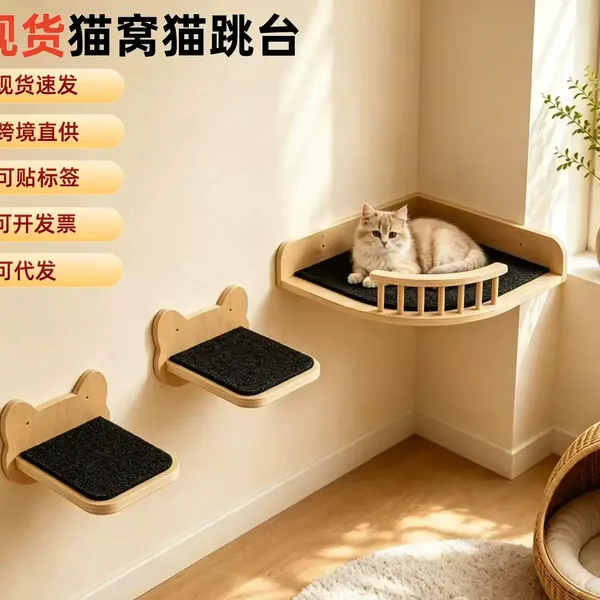
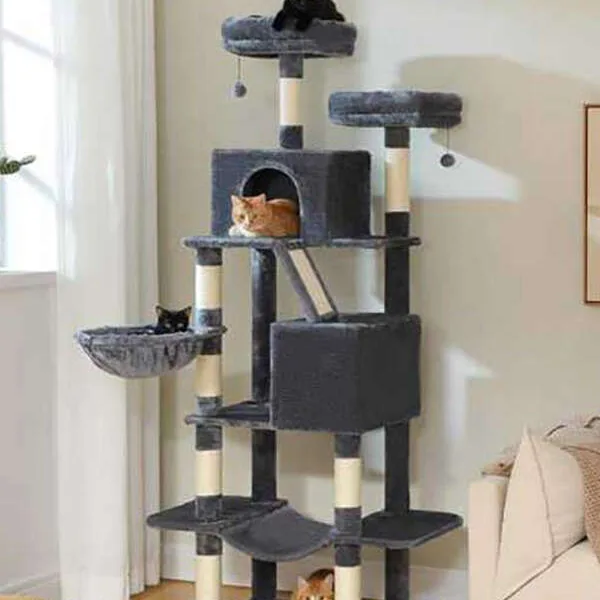
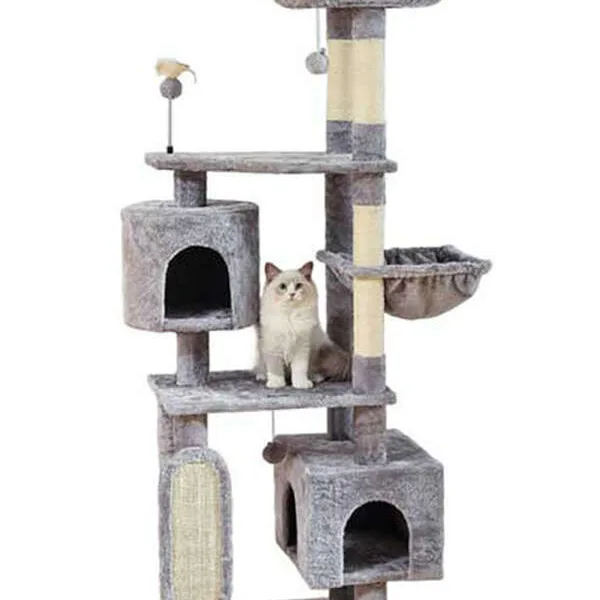
Real products we manufacture — sizes and options are on the product page.
Buying checklist
- Ask for the tier table (quantity vs unit price), not a single MOQ figure
- Confirm which costs are fixed per design and which are fixed per SKU — the per-SKU ones drive multi-model orders
- Calculate container fill for the tier you intend to order before agreeing a quantity
- Keep a first order narrow and deep (2–3 designs) rather than wide and shallow
- Get the setup-sensitive costs named in writing: carton plate, fabric roll minimum, first-article inspection
FAQ
Why is the MOQ for pet products often higher than for other goods?
It is usually setup rather than material. A cat tree needs panel cutting and edge-banding setup, sisal wound to a specific post length, carton artwork with a printing plate, and a first-article inspection — none of which fall when quantity falls. On top of that, pet furniture is bulky, so the quantity that fills a container is often higher than a light, high-value product would need. The MOQ reflects both effects at once.
Can I place a small trial order before committing to the MOQ?
Yes, but ask for it as a defined path rather than a favour. The usual route is samples at sample pricing to test the product itself, then the first production order at MOQ once design and carton are approved. A narrow order of two or three designs at a quantity that clears setup is a better trial than a wide order of ten designs at low quantities, because the wide order pays ten setups and still does not show you how the factory performs at volume. Treat any 'we will do a small order this once' promise with care, because the absorbed cost tends to reappear as a cut somewhere else.
Does a higher MOQ mean a lower price per unit?
Yes, but with sharply diminishing returns. The large part of the drop happens in the first step, from a very small order to a moderate one, because that is where fixed setup stops being spread across too few units. Beyond a few hundred sets the curve flattens, so the difference between 500 and 1000 is often only a few per cent — usually not worth the inventory and cash risk on a first or second order. If price keeps falling steeply at high tiers, ask what specifically is being recovered at the low tiers.
Want the tier table for a specific model?
Tell us the cat tree or pet product you are considering and the quantity you have in mind. We will reply with the quantity tiers, the unit price at each, and the container fill at each tier — so you can compare landed cost rather than a headline MOQ.
See the rangeFloor to Ceiling Cat Tree: What to Check Before You BuyWall Mounted Cat Shelves: Load Ratings, Fixings and LayoutCat Tree for a Maine Coon: Sizing Rules That Actually WorkCat Tree for Multiple Cats: Sizing for Two, Three or MoreSisal Cat Tree Posts: What Actually Determines How Long They LastHow Tall Should a Cat Tree Be? A Practical Guide