Wall Mounted Cat Shelves: Load Ratings, Fixings and Layout
Wall systems sell well because they look like furniture instead of pet gear. They also fail differently from floor trees: the shelf is fine, the fixing is not.
The load path is the whole story
A shelf carries the cat, the bracket carries the shelf, and the fixings carry the bracket into the wall. Every failure in this category happens at the last step. A 5 mm screw into plasterboard has a pull-out strength of a few kilograms — nowhere near a jumping cat.
Wall type to fixing, without guesswork
| Wall | Fixing | Notes |
|---|---|---|
| Solid brick or concrete | Masonry anchor, 8 mm or larger | Most forgiving; still check the anchor's rated pull-out |
| Timber stud | Coach screw into the stud centre | Find studs first — a stud finder is not optional |
| Plasterboard, no stud | Toggle bolt or heavy-duty cavity anchor | Rating must exceed the shelf's stated load with margin |
| Tile over board | Cavity anchor through the tile | Drill slowly, no hammer action, or the tile cracks |
Package the correct fixings for the destination market. Selling a masonry anchor into a market where most homes are timber frame generates returns you cannot argue with.
Layout: cats do not walk on single shelves
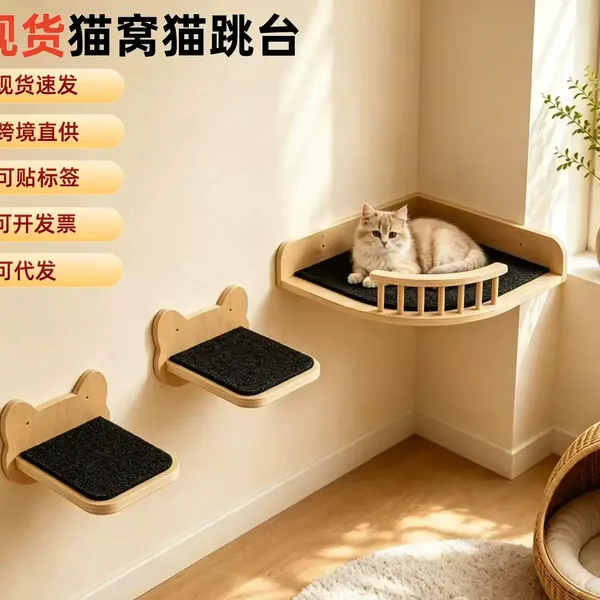
A single shelf on a wall is decoration. A route is a series of steps with a rise of roughly 30 to 40 cm between levels, each landing large enough for the cat to turn around. For a large cat, go to the upper end of that range and make the platforms wider than you think — a Maine Coon needs to lie down, not perch.
- Start the route from something the cat already uses: a sofa arm, a window sill, a low cabinet.
- Keep the first two steps close together. Once the cat trusts the route, spacing can open up.
- End at a high point with a view — that is the reward that keeps the cat using the system.
Materials that survive claws
Carpet-wrapped board is the default and it is fine for platforms. What matters is how the edge is finished: exposed board edges delaminate and look worn within months. Wrapped edges, or a solid wood front edge, hold up far better and photograph well in listings.
Sisal on the vertical faces gives the cat something to scratch where it climbs, which protects the shelf surface. Bare painted shelves look clean in the catalogue and get shredded in the home.
What to check on a supplier quote
- Stated load per shelf, and whether the fixings included are rated for that load
- Which wall types the included fixings cover
- Whether shelves are sold as individual pieces or as a set — sets convert better at retail
- Carton count per set, because multi-carton sets cost more to fulfil than they look
From our product catalogue
Real products we manufacture — sizes and options are on the product page.
Buying checklist
- Load rating stated per shelf, with the fixing rating to match
- Fixings matched to the wall types common in the destination market
- Shelf depth adequate for a large cat to lie down
- Edge finish wrapped, not exposed board
- Sold as a set with a suggested layout, not loose pieces
FAQ
How much weight should a wall mounted cat shelf hold?
Work backwards from a jumping cat rather than a resting one. A shelf rated for at least three to four times the cat's body weight, with fixings rated to match, leaves a sensible margin.
Will shelves damage the wall?
They leave fixing holes, which is unavoidable. The difference between a good and bad install is whether the fixings are right for the wall — wrong fixings pull out and take a chunk of plasterboard with them.
Can I mix wall shelves with a floor cat tree?
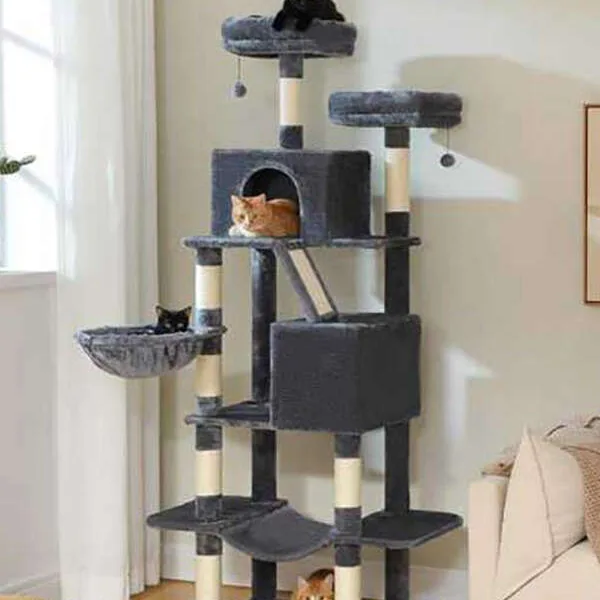
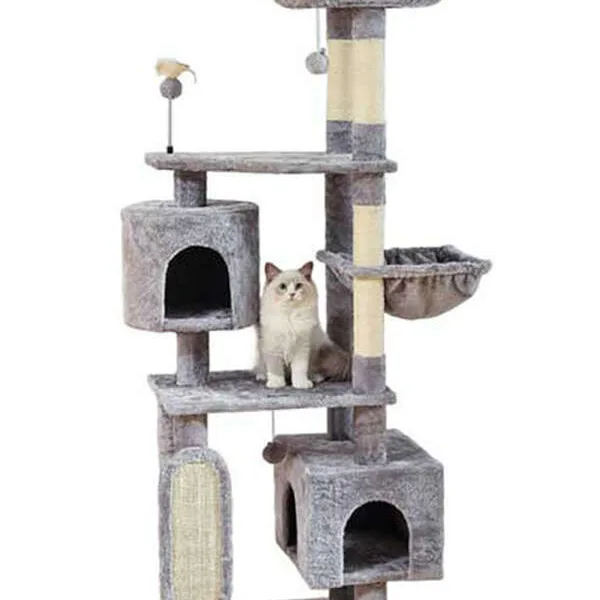
Yes, and it usually works better than either alone. The tree anchors the route at floor level and the shelves extend it upward along the wall.
Wall systems, specified for your market
We produce modular shelf sets with stated load ratings and fixings matched to your destination market. Ask for the layout sheet and carton plan.
See the range