Modern Cat Tree: What Makes It Look Modern, and What Makes It Last
Most listings call a tower modern because the fabric is grey. The ones that genuinely fit a living room share a few specific decisions — and those same decisions are where the cheap versions quietly cut corners.
Modern is a set of decisions, not a colour
Four things separate a tower that belongs in a furnished room from one that looks like pet equipment:
- No faux fur. Shag and long-pile plush read as pet product instantly. Short-pile fabric, felt, woven textile or bare wood read as furniture.
- Visible structure. When the frame and platform edges are legible — square sections, straight lines, exposed wood — the object reads as designed. When everything is wrapped in one soft material, the shape disappears.
- Low visual mass. Thin platforms, open sides and a single accent colour keep the object from dominating a room. Bulky condos with three colours do the opposite.
- Restrained palette. Two tones at most. Beige, grey, off-white, natural wood. The colour has to survive four years of sunlight and a washing machine, which is the part that gets ignored.
Each design choice has a construction consequence
This is where "modern" becomes a specification problem rather than a styling one.
| Design decision | What it forces in construction | What to verify with the supplier |
|---|---|---|
| Thin, clean platforms | Span has to be short, or the board has to be thicker, or it flexes under load | Board thickness and span per platform; whether corbels or brackets support the widest ones |
| Visible wood frame | Joints are exposed — no fabric skirt to hide a bad connection | Joint type: bolts through board, threaded inserts, or metal brackets |
| Bare or lightly wrapped posts | Less sisal means less margin for wear; the core becomes visible | Core material, wall thickness, and whether posts are replaceable |
| Light colours | Soiling and dye-lot variation show immediately | Fabric composition, cleaning instructions, and colour consistency across a production run |
| Open sides, no skirt | Nothing hides the base — it has to look intentional and be wide enough | Base dimensions and how the base panel is finished on the underside |
Why design-led towers wobble more
Two of the four decisions above remove material. Removing the fabric skirt removes a stiffening layer and hides fewer sins. Removing bulk removes mass that was, accidentally, keeping the tower planted.
So a modern tower has to earn its stability differently: a wider base relative to the top platform, a lower first platform, thicker boards at the widest spans, and joints that do not rely on particle board gripping a bolt. Ask for the tested load per platform and the joint specification. A supplier who designs for this category can answer both; one who merely changed the fabric cannot.
Colour and material: the parts that fail after delivery
Two complaints dominate reviews of light-coloured cat furniture, and both are sourcing problems rather than design problems.
Dye-lot variation. Beige is the hardest colour to keep consistent. If a programme ships across several production runs, panels from different lots can differ visibly in daylight. Ask how the factory controls lot consistency and whether it keeps a retained sample.
Pilling and cleaning. Short-pile fabric pills where cats push off. Specify the abrasion test the fabric has passed, and confirm the cover is removable and machine washable — that single feature carries a lot of review weight in this category.
What to lock before a volume order
For a design-led range the specification sheet does more work than the catalogue photo. Write down: platform sizes and thickness, base footprint, post diameter and core, joint type at the top three load points, fabric name with abrasion result, colour reference with lot control, and carton dimensions with corner protection.
Then photograph a fully assembled unit in a real room, not on white. The photo is the product in this category — and it is also the honest test of whether the design actually reads as furniture.
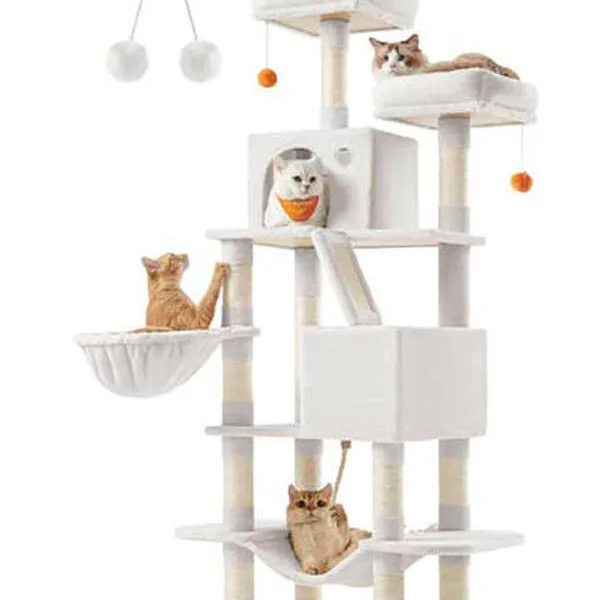
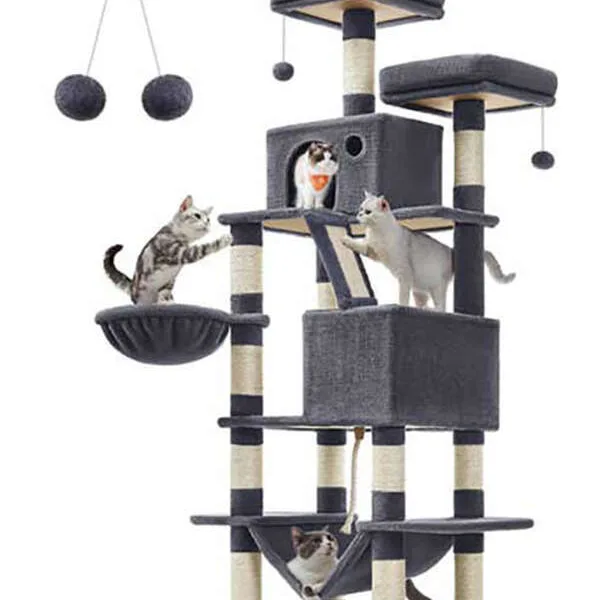
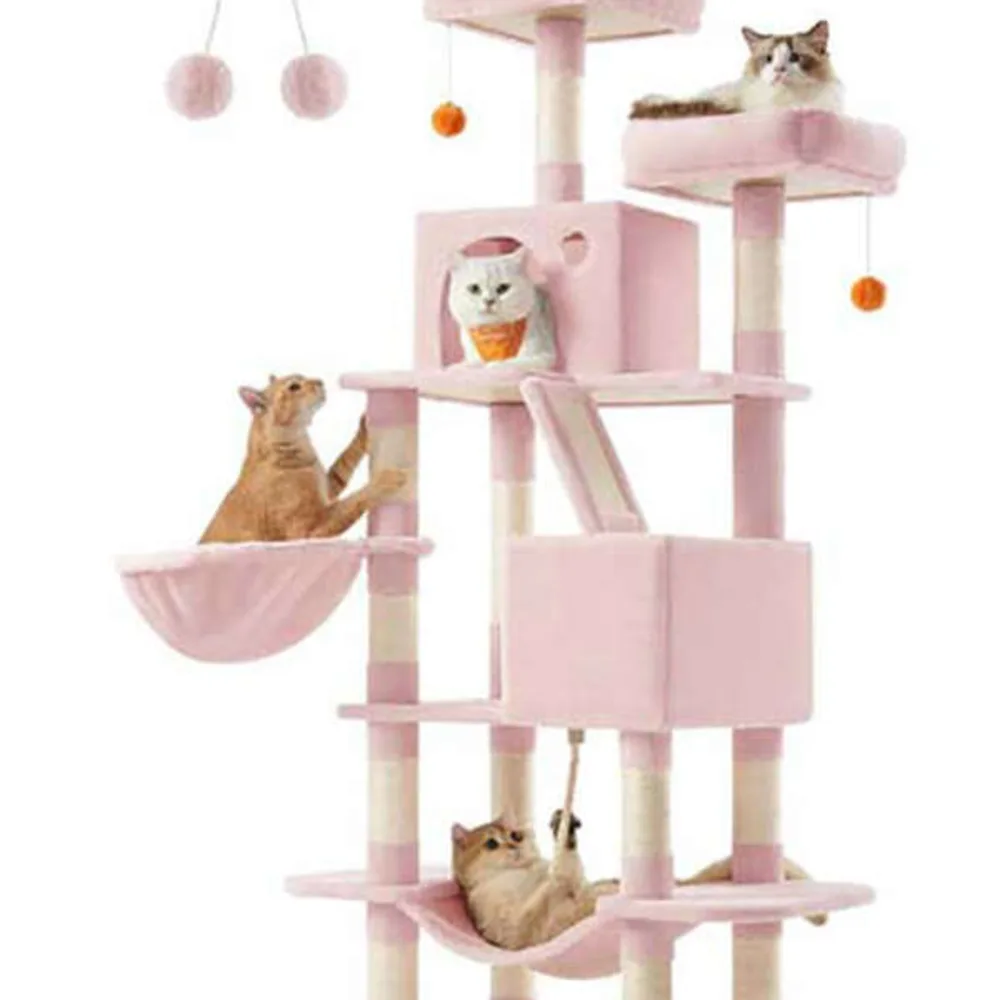
From our product catalogue
Real products we manufacture — sizes and options are on the product page.
Buying checklist
- Platform size, thickness and span confirmed for the widest levels
- Joint type specified at the top three load-bearing points
- Base footprint measured against top platform area
- Post core and wall thickness confirmed; replacement posts available
- Fabric named with abrasion result and washing instructions
- Colour lot control and retained sample agreed before the run
- Carton dimensions and corner protection confirmed for the model
FAQ
What makes a cat tree look modern rather than like pet furniture?
Short-pile or woven fabric instead of faux fur, visible frame and platform edges, thin platforms with open sides, and a palette limited to two tones. Colour alone is not enough — a grey tower covered in shag plush still reads as pet equipment.
Are modern cat trees less stable?
They can be, because clean lines usually mean less material and less hidden bracing. Stability then has to come from a wider base, a lower first platform, thicker boards at wide spans and better joints. Ask for tested load per platform rather than judging from the photo.
Do light-coloured cat trees stain badly?
Soiling shows sooner than on dark fabric, so removable, machine-washable covers matter more. The bigger sourcing risk is dye-lot variation: panels from different production runs can differ visibly in daylight, so agree lot control and keep a retained sample.
Building a design-led cat furniture range?
We manufacture modern cat trees and pet furniture in Ningbo, and quote with platform sizes, joint specification, fabric results and carton loading attached, so design and landed cost can be checked together.
See the rangeFloor to Ceiling Cat Tree: What to Check Before You BuyWall Mounted Cat Shelves: Load Ratings, Fixings and LayoutCat Tree for a Maine Coon: Sizing Rules That Actually WorkCat Tree for Multiple Cats: Sizing for Two, Three or MoreSisal Cat Tree Posts: What Actually Determines How Long They LastHow Tall Should a Cat Tree Be? A Practical Guide