How to Import Pet Products from China
Importing pet products is not complicated, but it is unforgiving: bulky goods punish bad packing maths, and a mis-declared HS code punishes you at the destination port rather than at the loading dock.
The job in one paragraph
Pet furniture is a bulky, low-value-per-cubic-metre category, which means the freight bill and the container fill decide your margin long before the unit price does. The import process itself is standard: agree a spec, book the space, take the documents, clear customs, receive. Where first-time importers lose money is in three narrow places — the carton dimensions, the HS classification, and the goods description on the commercial invoice. Everything else is routine.
Documents: what is needed and what is optional
| Document | Issued by | Purpose | Always needed? |
|---|---|---|---|
| Commercial invoice | Supplier | Value declaration, duty basis, payment terms reference | Yes |
| Packing list | Supplier | Carton count, dimensions, net/gross weight per carton | Yes |
| Bill of lading (B/L) or sea waybill | Carrier / forwarder | Title to the goods under a B/L; release instruction under a waybill | Yes |
| Certificate of origin | Chamber of commerce / issuing authority | Supports preferential duty under an applicable trade agreement | Depending on destination scheme |
| Fumigation / heat-treatment certificate | Authorised treatment provider | Required by some destinations for solid wood packaging (ISPM 15 scope) | Depends on destination and packing material |
| Product test reports | Third-party lab | Supports a compliance claim for the destination market | Depends on market and product |
Two clarifications that save arguments later. First, the certificate of origin only reduces duty if your destination actually has a scheme with China that covers your product — a document you paid for and cannot use is a pure cost. Second, ISPM 15 applies to solid wood packaging (pallets, crates, dunnage), not to the manufactured product itself, so a plywood or MDF cat tree does not trigger a wood-treatment requirement because of its own material. Ask your supplier what the pallets are made of, not just what the product is made of.
Container maths: the calculation nobody does before quoting
A 20GP holds roughly 28 cubic metres of usable space and a 40HQ roughly 68, before the packing inefficiency of boxes that do not tessellate. Pet furniture cartons are long and flat, and they stack badly, so assuming 85–90 per cent utilisation is realistic; assuming 100 per cent is how a "full container" arrives half loaded.
| Carton type (example) | Carton volume | 20GP @ 25 m³ usable | 40HQ @ 60 m³ usable |
|---|---|---|---|
| Small tower, single carton | ≈ 0.09 m³ | ≈ 275 cartons | ≈ 660 cartons |
| Medium tower, two cartons | ≈ 0.16 m³ total | ≈ 155 sets | ≈ 375 sets |
| Large tower / condo, two cartons | ≈ 0.28 m³ total | ≈ 90 sets | ≈ 215 sets |
| Wall shelf set, flat pack | ≈ 0.05 m³ | ≈ 500 sets | ≈ 1,200 sets |
These figures are worked examples from typical carton sizes, not a loading plan for any specific model — the real number comes from your own carton dimensions. The method matters more than the numbers: take cubic metres per set, divide usable container volume by it, then round down again for the top gap and door-end space you cannot fill. Also check the weight limit independently, because a container is limited by both volume and payload, and pet furniture usually hits the volume ceiling first.
HS classification: the decision made before shipping that you cannot undo
Pet furniture usually sits somewhere between furniture classifications and pet-supply classifications, and the choice is not free — it changes the duty rate, the documentation the destination customs may ask for, and sometimes whether an additional product-safety regime applies. Classification depends on material, function and how the item is principally used, so two similar-looking cat trees in different materials can legitimately land in different codes.
The practical rule: agree the HS code with your importer or customs broker before the goods ship, not after. Corrections at the destination port cost money in storage, amended entries and sometimes penalties, and the person who pays is whoever is named as importer of record. Ask the supplier which code they normally use and why, then have your broker confirm it for your market. Do not accept a code because it was on last year's invoice for a different product.
Incoterms: pick one and understand who owns the risk
| Term | Supplier handles | You handle | When it suits |
|---|---|---|---|
| EXW | Making the goods available at the factory | Everything from factory gate onward | You already have a forwarder in China and want full control |
| FOB | Export clearance and loading at the named port | Ocean freight, insurance, destination clearance | Most common for container loads; you see the freight cost separately |
| CIF | Freight and minimum insurance to destination port | Destination charges, clearance, inland delivery | Convenient, but the freight cost is hidden inside the price |
| DDP | Everything including duty and delivery | Nothing until the door | Small volumes or where you cannot be importer of record |
Under CIF and DDP you cannot see what freight actually cost, which is exactly the number to compare between two suppliers. If you are ordering more than a trial quantity, FOB gives you a freight line you can benchmark. Under DDP, check who is named as importer of record, because that entity carries the compliance obligation, not the supplier.
The six mistakes that show up on first shipments
- Comparing FOB prices without carton data. The cheaper unit price can be the dearer landed cost once packing density is counted.
- Declaring the goods vaguely. "Furniture samples" or "pet items" invites questions. Describe what it is, what it is made of and what it is for.
- No agreed inspection point. Whether inspection happens before packing or after loading changes what you can still fix.
- Approving a sample that is not the production spec. The sample that becomes the standard must be made from the materials you are actually buying.
- Ignoring the destination's own rules. Import requirements, labelling and product-safety obligations are set by the importing country, and your supplier ships to many countries — they cannot be the authority on yours.
- Assuming a certificate covers the product. A document that covers the factory's management system is not the same as a test report on the item you are importing.
A workable first-order sequence
Spec and signed sample → carton dimensions confirmed in writing → landed-cost calculation at realistic container fill → HS code confirmed with your broker → inspection point agreed → documents checklist sent to the supplier before production, not after → booking → pre-shipment check → clearance → delivery. The document checklist going out before production is the step people skip and then chase for three weeks.
On compliance, be specific about who confirms what. Requirements for pet products differ by destination and are revised periodically, and we are not the authority on your market's rules — the confirmation has to come from your importer, broker or a testing lab accredited for that market. What we can do is supply the material and construction details those parties will ask for.
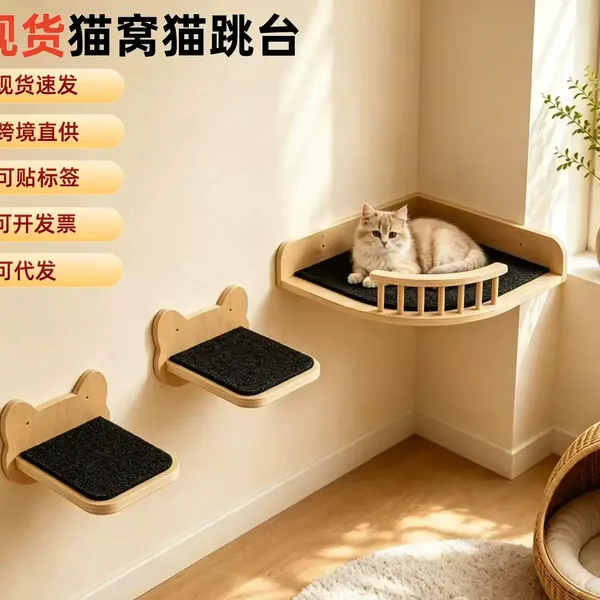
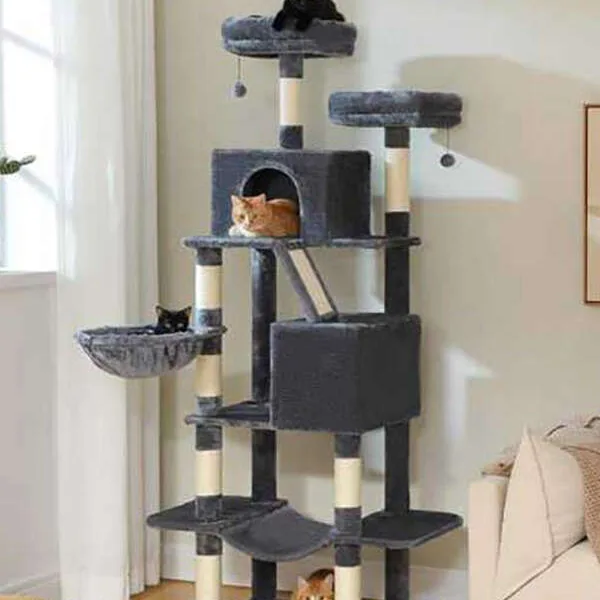
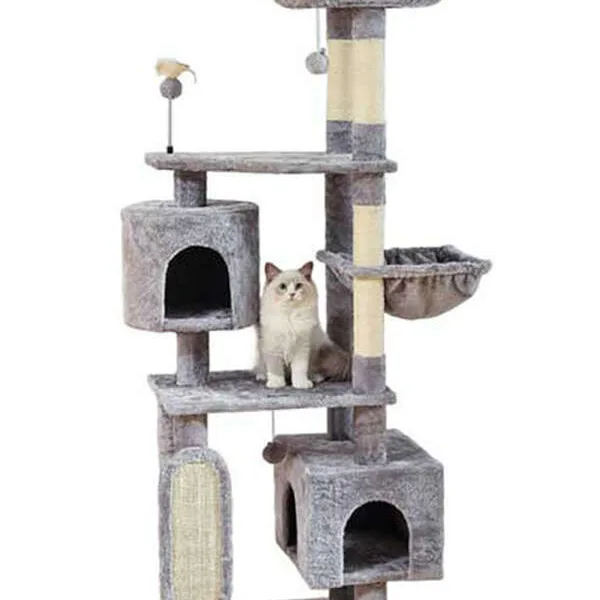
From our product catalogue
Real products we manufacture — sizes and options are on the product page.
Buying checklist
- Carton dimensions and cubic metres per set received in writing, not estimated from a photo
- Landed cost calculated at realistic container fill, not theoretical maximum
- HS code confirmed with your customs broker before the shipment leaves
- Incoterm named in the quotation, and the freight cost visible if you are comparing suppliers
- Compliance requirement for your destination confirmed by your importer, broker or an accredited lab
- Inspection point agreed: before packing, or after loading
- Document checklist sent to the supplier before production starts
FAQ
How many cat trees fit in a 40HQ container?
There is no single answer, because it is driven by carton volume rather than unit count. A 40HQ gives roughly 60 usable cubic metres once you allow for stacking inefficiency. Divide that by the cubic metres per set from your own carton dimensions: a set of two cartons totalling 0.16 m3 works out at about 375 sets on paper, and about 340 once you allow for the unusable top layer and door end. Always ask for the loading plan, not just the arithmetic.
What documents do I need to import pet products from China?
Every shipment needs a commercial invoice, a packing list and a bill of lading or sea waybill. A certificate of origin only helps if your destination has a trade scheme with China covering that product. Fumigation or heat-treatment certification relates to solid wood packaging such as pallets and crates, not to the product material itself. Product test reports depend on what your destination market requires, and your importer or broker is the right party to confirm that list.
Which HS code applies to cat trees and pet furniture?
It depends on the material, the construction and how the item is principally used, which is why two similar-looking products can legitimately classify differently. The code matters because it sets the duty rate and the documents the destination customs may request. Confirm it with your customs broker for your own market before the goods ship — correcting a classification after arrival costs storage and amended-entry fees, and the importer of record carries that cost.
Importing cat trees or pet furniture?
We manufacture cat trees and pet furniture in Ningbo and ship worldwide. Send us the models you are considering and we will come back with carton dimensions, cubic metres per set and a container loading plan — the three figures you need before you can quote a landed cost.
See the rangeFloor to Ceiling Cat Tree: What to Check Before You BuyWall Mounted Cat Shelves: Load Ratings, Fixings and LayoutCat Tree for a Maine Coon: Sizing Rules That Actually WorkCat Tree for Multiple Cats: Sizing for Two, Three or MoreSisal Cat Tree Posts: What Actually Determines How Long They LastHow Tall Should a Cat Tree Be? A Practical Guide