Washable Cat Bed: What Comes Off Decides What Can Be Washed
"Washable" is the most reused word in cat-bed listings and the least defined. A bed where the cover zips off, a bed you can put in the machine whole, and a bed you sponge down are sold with the same adjective. The difference is not marketing — it is fill, seam and zip, and it shows up in the first wash.
Three claims hide behind one word
Sort every "washable" bed into one of three constructions and the category stops being confusing:
- Cover-off. The outer cover unzips and the fill — foam block, fibre pad, bolster insert — stays out of the machine. This is the only construction that works with a foam core, and it is what most of the market actually sells.
- Whole-bed washable. No rigid core at all: the entire bed is fabric and loose or bonded fibre fill, so it can go in as one piece. Cheaper to make, harder to dry, and it deforms if the fill is not bonded.
- Surface washable. Nothing comes off. The word is used because the cover has a coating or the bed has a frame, and the honest label would be "wipe clean".
For a buyer the question is never "is it washable" but "what exactly comes off, and what does the care label allow". Those two answers are a spec line, and a supplier who cannot give them in writing has not built the bed to be washed — only described it that way.
The zip is the real bill of materials
A removable cover needs a zip, and on a round bed the zip is longer than most buyers expect, because it runs around a circumference rather than across a width. Circumference is π times the diameter, so a 60 cm round bed needs roughly 1.9 m of zip for a full-perimeter opening, and about 0.95 m for a half zip. A 90 × 60 cm rectangular bed is worse: its perimeter is 3.0 m, and a full zip costs three metres of tape plus the labour of sewing it around four corners.
That arithmetic drives three decisions a buyer can actually specify:
- Full zip vs half zip. A full zip lets the cover turn inside out and be refitted without wrestling the bolster. A half zip is cheaper but the cover only peels back — fine on a flat mat, awkward on a deep bolster.
- Zip position. On the underside it is hidden and the customer never sees it; on the side wall it is easier to use but becomes a visual feature and a place where a cat's claws catch.
- Zip grade. Nylon coil tolerates washing cycles better than moulded plastic teeth, and a metal slider on a curved seam is where covers fail first. Ask which one is quoted, because the two look identical in a photo.
The fill decides whether the wash is even possible
This is where most "washable" claims break, and it is not a matter of degree — it is a yes or no per fill type:
| Fill | Can the whole bed be washed? | What happens in the machine | What the buyer should require |
|---|---|---|---|
| Moulded foam core | No | Water enters the open cells, the block stays heavy for days, corners crumble after repeated cycles | Removable cover, and a care label that says cover only |
| Loose polyester staple fibre | Yes | Washes clean but clumps into lumps; needs re-lofting by hand or a tumble cycle | Baffled or channel-stitched inner bag so the fill cannot migrate to one end |
| Bonded / needle-punched fibre pad | Yes | Holds its shape through washing; the pad is the reason the bed still looks like a bed afterwards | Pad density quoted in g/m², and the same figure for every size in the range |
| Shredded foam | Yes, with care | Light, dries fast, but migrates and settles flat under a heavy cat | Channel stitching, plus an honest inner-thickness figure rather than a lofted one |
None of that is exotic. It is the difference between a bed the customer washes once and a bed the customer washes monthly for two years — and the second one is what generates repeat orders instead of returns.
Drying is the part that gets complained about
Take a 60 cm round bolster bed with a 15 cm wall and work out how much fabric the customer is actually trying to dry. The top face is a circle of about 0.28 m². The outer wall is a band 1.9 m long and 15 cm high, another 0.28 m². The inner floor, once the bolster is counted, is roughly 0.15 m². Add seam allowance and you are at about 0.7 m² of plush per cover — more on a two-sided quilted cover, less on a thin knit.
At a typical plush weight of 300–400 g/m², that cover is 200–280 g dry. After a spin cycle it will hold a comparable mass of water again — the exact retention depends on pile height and fibre, which is why a supplier's spin-retention figure is worth asking for. The practical point is that the customer is evaporating several hundred grams of water indoors, and in a bathroom with no airflow that is a long wait. The feature is judged on that wait, not on the wash cycle.
Two cheap design answers: offer a second cover as an option so one is always dry, and avoid pale plush on the sleeping surface — a light pile shows the drying ring at the edge long after the cover is dry to the touch.
What goes into the spec sheet
- Does the cover come off, and is the zip full-perimeter, half, or none
- Zip type and position, stated in writing on the quotation
- Fill type, and for pads the density in g/m²; for foam, the thickness
- Care label wording the factory will actually sew in — wash temperature, tumble or no tumble
- Shrinkage and pilling figures for that fabric lot, not for the fabric family
- Whether a replacement cover is available as a separate SKU
The last item is the one most ranges miss, and it is the cheapest retention tool in the category: a customer who can buy a second cover does not buy a second bed from a competitor.
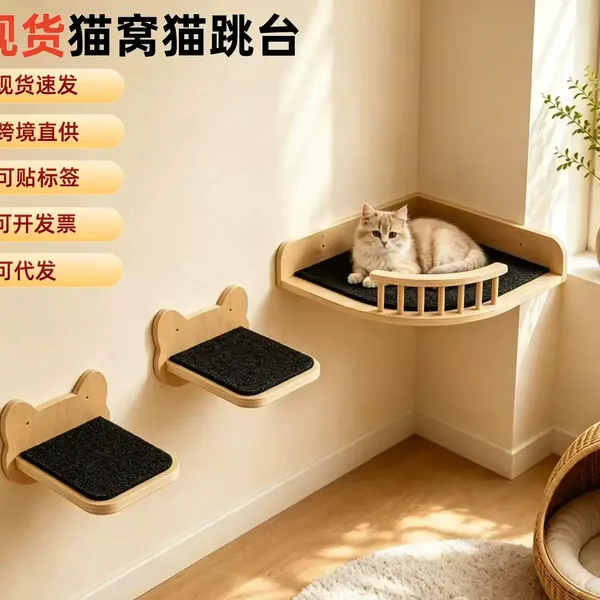
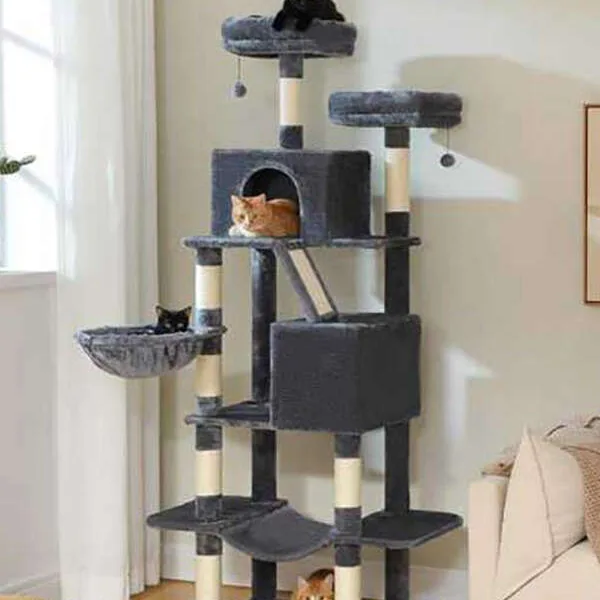
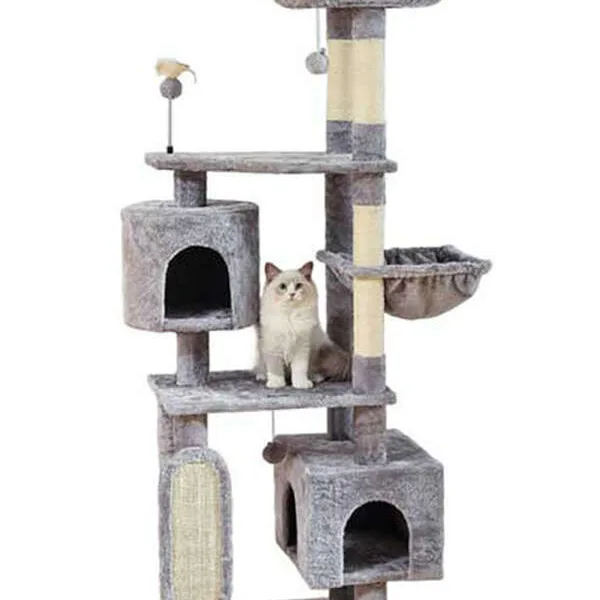
From our product catalogue
Real products we manufacture — sizes and options are on the product page.
Buying checklist
- Cover removable, with the zip type and length stated on the quotation
- Fill type named, plus pad density in g/m² or foam thickness in mm
- Care label wording agreed in writing, including whether tumble drying is allowed
- One flat or low-rim option in the range, since deep bolsters are the hardest to dry
- Replacement cover available as a separate SKU
- Packed dimensions and unit weight, so the freight cost per cover is visible
FAQ
Can the whole washable cat bed go in the machine, or only the cover?
It depends entirely on the fill, and the two are not interchangeable. If the core is a moulded foam block, only the cover can be washed — a foam core that goes through a machine holds water for days and its corners break down over repeated cycles. If the bed has no rigid core, because the fill is loose polyester staple or a bonded fibre pad, the whole bed can usually be washed, though loose fill clumps and needs re-lofting. So the question to ask a supplier is not "is it washable" but "what comes off, and what is the fill" — the answer to those two decides the rest. A listing that will not name the fill has not been specified for washing.
How long does a washable cat bed take to dry?
Longer than the wash, and that is the number customers judge the product on. A cover for a 60 cm round bolster bed is roughly 0.7 m² of plush, so somewhere between 200 and 280 g of dry fabric at typical plush weights, and after a spin cycle it holds a comparable mass of water again. Drying that indoors depends on airflow and humidity rather than on the clock: in a warm room with a draught or a dehumidifier it is a matter of hours, in a closed bathroom it can run overnight. Foam cores should not be tumble dried at all, and loose fibre fill needs a low tumble with something to beat the clumps out. Buyers specifying for a humid market should ask the factory for its spin-retention figure for the actual fabric, and consider offering a second cover.
Will the cover shrink or pill after washing?
There is no single answer for the category, which is why the figure has to come from the fabric lot rather than from the product family. Woven cotton and knitted plush behave differently: a woven cotton can move measurably on the first wash unless it is pre-shrunk, while a polyester or microfibre knit usually holds its dimensions but is the one that pills, because pilling follows fibre staple length and how tightly the pile is anchored. Ask the supplier for the shrinkage and pilling result for the specific fabric being quoted, and ask whether it is pre-shrunk before cutting. If the cover is cut to the fill's exact size and the fabric has not been pre-shrunk, the cover either will not refit after washing or has been cut oversized and looks baggy new — either way it is a returns line.
Beds that survive the second wash
We build cat furniture and the padded surfaces that go with it, so the cover construction, the fill and the carton are quoted together rather than guessed. Send the sizes, the market and how you want the cover to come off, and we will put the zip type, fill specification and care-label wording in writing before the first sample — so the washability claim is something you can defend.
See the range