Orthopedic Dog Bed: Density Is Not Support
"Orthopedic" on a pet bed is a marketing word, not a medical one. What the buyer is really paying for is a foam that still has thickness left under the dog after a night of load — and that is decided by IFD and compression set, not by the density printed on the swing tag.
What the word "orthopedic" is allowed to mean
In most pet markets "orthopedic" is not a regulated claim the way it is for human medical devices, but it is still a claim a marketplace can ask you to substantiate. What it can honestly describe is a construction: a foam core thick and firm enough that a dog's hip does not reach the floor, in a cover the dog will actually lie on. What it must not describe is treatment — no bed relieves dysplasia, arthritis or post-surgical recovery, and copy that says so is the fastest way to a listing takedown in the EU or on Amazon.
So the useful question is not "is it orthopedic" but "how many millimetres of foam are left under the hip at the end of the night, and how many will still be left in six months". Both are arithmetic, and both can be specified on a purchase order before a single bed is made.
The lab number that connects to a dog
Foam is sold on indentation force deflection (IFD, also called ILD): the force in newtons needed to press a standard 322.6 cm² (50 in²) circular foot into the foam by 25% of its thickness, per ASTM D3574 or ISO 2439. Divide that force by the foot area and you get a pressure — which is the same unit a dog's body exerts on the bed. That is the bridge between a spec sheet and an animal.
Worked below for a 25 kg dog, which lands at roughly 2.5 kPa of pressure on the sleeping surface (mass × 9.81 over an effective contact patch of about 990 cm², assuming the patch is 55% of the lying silhouette — legs tucked, gaps under the belly excluded). The last two columns assume the foam behaves near-linearly up to 25%, which is an approximation: real foam stiffens as it densifies, so deep indentation is under-predicted, not over-predicted.
| IFD at 25% compression | Pressure at 25% indentation | Indentation under a 25 kg dog at 2.5 kPa | Foam left under the hip, from a 100 mm pad |
|---|---|---|---|
| 60 N | about 1.9 kPa | about 34% | about 66 mm |
| 80 N | about 2.5 kPa | about 25% | about 75 mm |
| 110 N | about 3.4 kPa | about 18% | about 82 mm |
| 150 N | about 4.7 kPa | about 13% | about 87 mm |
| 200 N | about 6.2 kPa | about 10% | about 90 mm |
Two readings matter here. A soft foam is not automatically a bad bed — a 60 N foam on a 100 mm pad still leaves 66 mm, which is more than a 40 N foam on a 50 mm pad could ever offer. And a very firm foam buys very little extra clearance once it is past about 150 N: the curve flattens, so the last 50 N of firmness adds a few millimetres while making the bed feel like a board. If a supplier's answer to every comfort complaint is "we will make the foam harder", the arithmetic says that stops paying at some point.
Density, and why the swing tag misleads
Density is mass per cubic metre. It predicts how long a foam survives repeated loading far better than it predicts how firm it feels, and the two are routinely confused in trade copy. Typical supplier bands, quoted as industry ranges rather than as measurements of any bed we have made:
| Density band | What it usually is | Typical 25% IFD band | Honest use |
|---|---|---|---|
| 18–22 kg/m³ | Standard upholstery foam | about 60–100 N | Cheap bolster walls, not a sleeping core |
| 25–30 kg/m³ | Mid-grade polyurethane | about 80–130 N | Entry-level beds, small dogs |
| 35–45 kg/m³ | High-density / HR foam | about 110–180 N | The realistic band for a load-bearing core |
| 50–60 kg/m³ | High-resilience or reconstituted | about 150–250 N | Heavy dogs, thin profiles, long service life |
| 50–80 kg/m³ | Viscoelastic (memory) foam | wide, often 50–120 N | Pressure spreading, but slow recovery and heat |
Note the overlap: density and IFD are independent variables. Two foams both at 30 kg/m³ can sit at 80 N and 130 N, which is a 60% difference in how far a dog sinks, and the tag will read the same on both. Memory foam is the clearest case — it is dense and soft at the same time, spreads pressure well, but recovers slowly enough that a dog shifting position at night finds a cold dent, and it stiffens in an unheated room. If your market is northern Europe or Canada, ask what the foam does at 5 °C, not at 23 °C.
The number that decides whether it survives the season
Compression set is the percentage of thickness a foam fails to recover after being compressed and held — the standard test is 22 hours at 50% compression, often at 70 °C, per ASTM D3574 D. A foam with 5% set on a 100 mm core loses 5 mm permanently; a foam at 15% loses 15 mm. Stack set on top of nightly indentation and you get the two-month review: "was lovely, now it is a mat".
Set is where cheap and mid-grade foam separate, and it is invisible in a showroom, because the sample has been out of the press for a week and has not yet been loaded a thousand times. A supplier either has the recovery figure for that foam lot or has not measured it. There is no third answer worth paying for.
Cover and base, in one paragraph each
A 100 mm foam core is useless under a knitted plush cover that stretches 15% in the first month — the cover bags, the fill migrates to the low end, and the dog sleeps on a slope. Cut the cover slightly negative, or use a woven face with a small amount of mechanical stretch. The cover also has to come off: an orthopedic core that cannot be washed is a hygiene problem within one season, and the zip is the part that fails first on a curved run, so specify nylon coil and the slider pull strength rather than the tooth size.
The base is the other half. A heavy dog pushes off when it stands, and a smooth base slides on tile, so the bed ends up against the wall with the dog half off it. Specify the base material by name — coated oxford, dotted non-slip, or a rubberised panel — and state it on the order, because "anti-slip" is a description, not a material.
What to put on the purchase order
- Core thickness in mm and foam type, with density in kg/m³ and IFD at 25% and 65%, quoted to a named test method.
- Compression set for that foam lot, with the test conditions.
- Inner sleeping dimensions for every size, not only the outer outline.
- Cover face material and stretch direction; whether the cover is removable, and the zip specification.
- Base material by name, not by adjective.
- Packed carton and unit weight, because a 100 mm core does not compress and the freight is a volume quote.
From our product catalogue
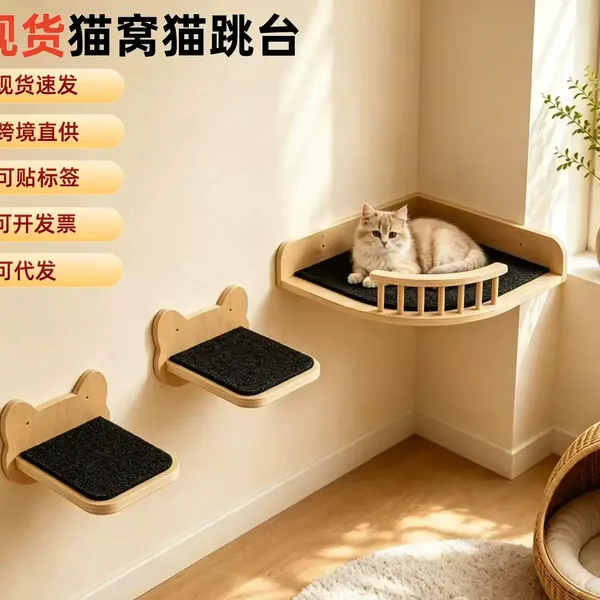
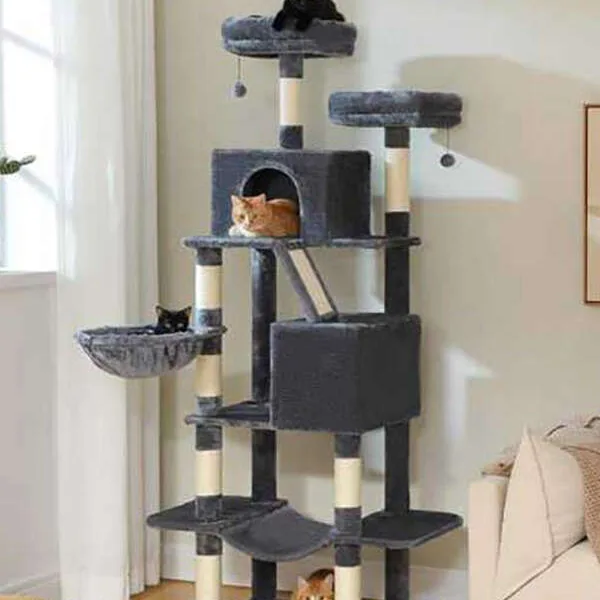
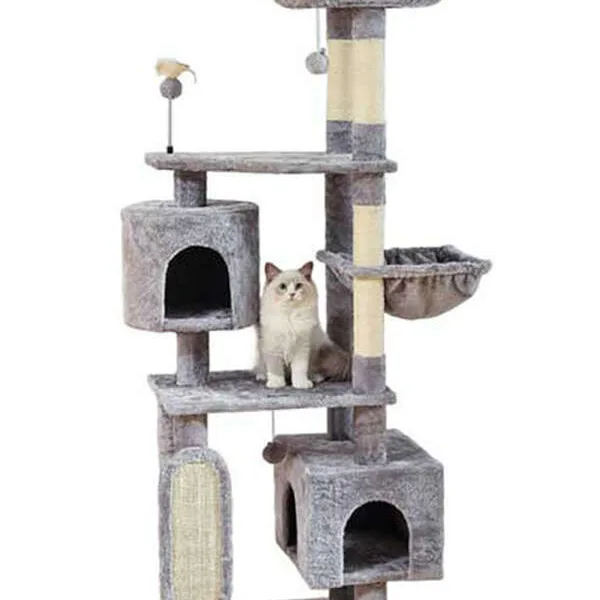
Real products we manufacture — sizes and options are on the product page.
Buying checklist
- Core thickness in mm, with foam type and density in kg/m³
- IFD at 25% and 65% compression, to a named test method
- Compression set figure for the actual foam lot, with test conditions
- Inner sleeping dimensions for every size, not just the outer outline
- Cover face material, stretch direction and zip specification if removable
- Base material named, not described as anti-slip
FAQ
Is a higher density foam always better for a dog bed?
No, and the two properties are being confused. Density, in kg/m³, mostly predicts how well a foam resists losing thickness over months of loading; IFD predicts how far the dog sinks tonight. Two foams at the same 30 kg/m³ can differ by 60% in IFD, so a dense soft foam can be less supportive than a lighter firm one, and memory foam is dense and soft at once by design. What density does buy you is fewer returns after three months, which is why the 35–45 kg/m³ band is where most load-bearing cores sit. Ask for both numbers plus compression set, and judge the foam on the trio rather than on the number the tag advertises.
How thick should the foam be for a 30 kg dog?
Thickness is what you have to lose, so start from the indentation. A 30 kg dog presses at roughly 2.5 kPa on the sleeping surface, and a foam with 25% IFD around 80 N reaches about that pressure at 25% indentation — so it will sink roughly a quarter of the pad. On a 100 mm core that leaves about 75 mm under the hip; on a 50 mm core it leaves about 37 mm, which is where dogs start choosing the floor. As a working rule, 80–100 mm of a 35–45 kg/m³ foam covers most dogs between 20 and 35 kg, and below 60 mm you are selling a mat with a bolster around it. Confirm the inner dimensions at the same time, because a thick bed with walls eats 15–20 cm of floor on each axis.
Why does an orthopedic bed go flat after a couple of months?
Almost always compression set plus cover stretch, not "the dog wore it out". Compression set is the percentage of thickness the foam fails to recover after being held compressed — 22 hours at 50% compression is the usual test — and a cheap foam at 15% set on a 100 mm core has lost 15 mm permanently before the dog has done anything unusual. Add a knitted cover that relaxes 10–15% in the first month and the fill migrates to the low end, so the bed both thins and slopes. Both are specifiable: ask for the set figure on the foam lot and for the cover's stretch direction and allowance. A bed that cannot be unzipped and washed adds the third failure, which is why removable covers matter more than the word orthopedic on the box.
Specifying a foam-core bed for your market?
Our factory builds pet furniture and the padded surfaces that go with it — foam cores, covers, zips, non-slip bases and the carton that carries them. Send the dog sizes you are targeting, the foam spec you want quoted, your market and how you need it packed, and we will come back with thickness, density, IFD, cover and carton in writing. If a foam grade or a size is outside what we currently run, we will say so instead of quoting around it.
See the range